Five featured articles about what’s trending in STEM education:
Obama Wants $4B to Help Students Learn Computer Science by the Associated Press
 President Barack Obama said Saturday he will ask Congress for billions of dollars to help students learn computer science skills and prepare for jobs in a changing economy. “In the new economy, computer science isn’t an optional skill. It’s a basic skill, right along with the three R’s,” Obama said in his weekly radio and Internet address.
This Company Is Making It Cool For Girls to Become Coders by Briana K. Stewart
 For decades, there has been a major gender diversity gap in science, technology, engineering, and mathematics (STEM). The tech world as we know it, is male dominated with little female representation in leadership roles. In 2014, The National Center for Women in Technology (NCWIT) revealed, a mere 18% of all computer and information science degrees were held by women. Women also make up just 26% of professional computing occupations, while only about 15% have at least one female founder. Leaders in the industry are acknowledging the gender deficit and have been encouraging women to join the industry.
Can Learning to Knit Help Learning to Code? by Holly Korbey
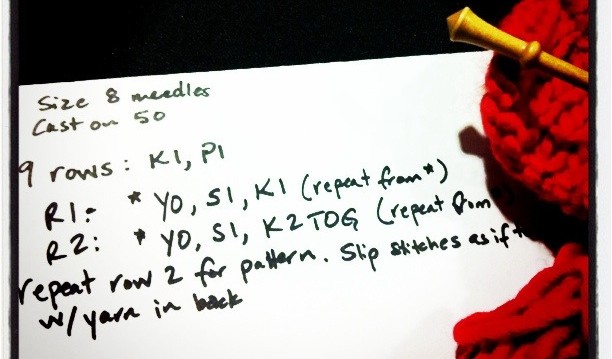 Today’s Waldorf students still knit socks and whittle kitchen spoons and many Waldorf schools shun the use of technology. Those two things — handwork and technology — might seem at first glance to be at odds. But there’s a case to be made that handwork and computing — and the kind of process that links the two — are more closely related than one might think.
Coloring by Numbers, Mathematically by Chau Tu
 If you’ve ever felt intimidated by math, or consider it a daunting labyrinth of numbers and equations in a textbook, you might think differently once you open up Patterns of the Universe: A Coloring Adventure in Math and Beauty.
Enabling students in a digital age: Charlie Reisinger at TEDxLancaster by TEDx Talks
 Charlie Reisinger, an innovative IT Director for Penn Manor school district in Lancaster County, shows how to provide affordable, new digital technologies to high school students. The answer is not only a cost-effective way to improve the quality of education, it is opening students’ minds.

If you’d like to receive weekly emails about STEM education, signup for our newsletter.